
A fast, flexible AI-powered cover system with PLR that actually delivers.
If you publish on KDP or sell low-content books, you know the pain: blank Canva tabs, guesswork on spine sizes, and hours lost to “almost right” cover drafts. (PLR) KDP Magic Covers claims to fix that with done-for-you templates, AI prompts, and full private label rights so you can rebrand and resell. In this (PLR) KDP Magic Covers Review, I share what I liked, where it fell short, and who should buy it. If you want pro-looking book covers without hiring a designer or learning Photoshop, this tool aims to be your shortcut.

What is (PLR) KDP Magic Covers?
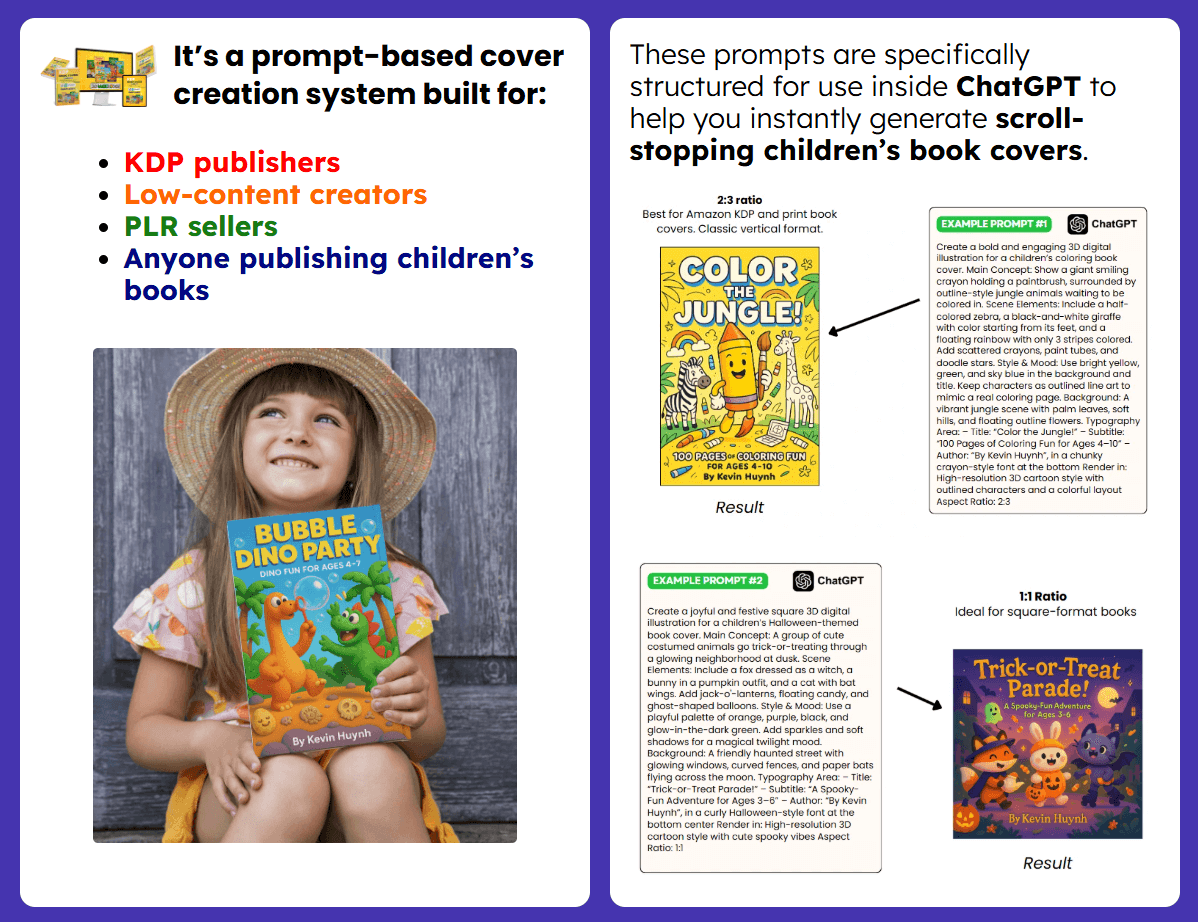
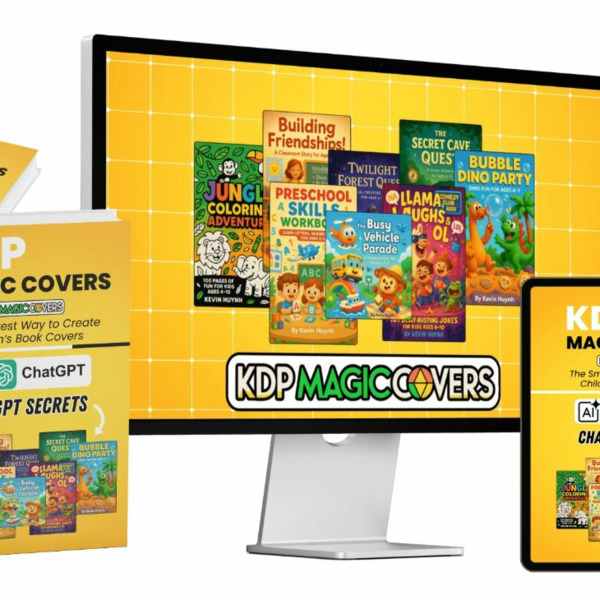
(PLR) KDP Magic Covers is a cover creation toolkit for Kindle Direct Publishing (and print) designed to help you build on-brand, high-converting covers fast. It blends editable templates (in common KDP sizes), AI prompt packs for generating fresh art, training for proper sizing, and mockups—then layers in Private Label Rights so you can customize, rebrand, and even resell parts of the content. The big promise: go from idea to polished KDP-ready cover in minutes, not hours.
My Personal Experience & In-Depth Walkthrough:
For the last 48 hours, I ran (PLR) KDP Magic Covers through a real workflow. I started by downloading the pack and opening the Canva templates. The starter templates cover popular sizes like 6×9 and 8.5×11. I liked that each template had a front, spine, and back already aligned. That saved me from manual math on spine width (huge pro). I still checked page counts with a calculator, which is a must on KDP.
Next, I tried the AI prompt pack with my go-to image model. The prompts were labeled by niche (journals, planners, kids’ activity books, romance, thriller, coloring). This made ideation fast. I could tweak a few style terms, rerun, and get clean, on-brief art in a few minutes. That’s a big win for creative speed. A minor con: some prompts output busy backgrounds on the first try. I had to add “minimal” or “flat background” to nail print-safe designs. Not a deal-breaker, but it adds a step.
I then dropped the generated art into the Canva layouts. The alignment guides, safe margins, and bleeds were baked in. This was smooth. I also used their mockups to preview how the book would look in 3D on an Amazon-style page. It helped me catch low-contrast titles before publishing (major pro).
The PLR angle is a differentiator. I cloned a set, changed brand colors and fonts, and rebuilt it as my own “niche cover kit.” This is where (PLR) KDP Magic Covers shines for agencies and Etsy shop owners. You can turn it into packaged cover bundles or client deliverables. A note of caution: you still need to read the specific PLR license to know exactly what you can resell and how. The pack mentions PLR, but always check details for stock art restrictions. That’s a small con—PLR licenses vary and you must comply.
Exporting to KDP specs was easy. I set the final size, checked DPI (300), and exported as PDF for print and PNG for mockups. A final pass for title legibility at thumb size sealed it. Time from blank page to ready cover: under 30 minutes for a simple niche book. For a stylized fiction cover, about an hour. For this (PLR) KDP Magic Covers Review, that speed-to-quality ratio is the headline pro.
What Makes It Stand Out / Key Features
- Editable KDP cover templates: Ready-to-use layouts for popular trim sizes with bleed and spine guides.
- AI prompt library: Niche-labeled prompts to generate unique art for journals, planners, and fiction.
- PLR licensing: Rebrand, customize, and resell within license terms for extra income streams.
- Mockups and previews: 3D and flat mockups to test thumbnails and storefront visuals fast.
- Simple sizing workflow: Clear guidance on margins, DPI, and export formats for KDP compliance.
- Brand-ready typography: Starter font pairings and color systems you can swap in minutes.
- Training snippets: Quick walkthroughs that focus on real-world KDP steps, not theory.
- Commercial use included: Create and sell book covers to clients or marketplaces (check license scope).
What I Like
- Fast start: Templates cut setup time to minutes and reduce sizing mistakes.
- Real KDP focus: Layouts match common trims and print needs, so fewer rejections.
- AI made practical: Prompts save ideation time and keep styles on brief.
- PLR leverage: Turn assets into your own branded kits or services.
- Mockup clarity: Easy thumbnail checks to spot low-contrast titles before you publish.
- Low-tech friendly: Canva-first approach means no Photoshop bottleneck.
- Niche coverage: Prompts and templates suit low-content and genre covers.
- Strong ROI path: Great for freelancers and Etsy sellers who want ready assets.

What Can be improved
- Prompt tuning: Some outputs need extra keywords to avoid busy designs.
- License clarity: A simple one-pager with allowed/prohibited uses would help.
- More genre depth: Extra presets for sci‑fi, lit‑fic, and historical would be welcome.
Pricing And Affordability
Below is a general overview based on typical WarriorPlus launches. Live pricing can change due to coupons, early-bird, or bundle options. Always check the checkout page for current details.
| Plan/Tier | What You Get | Typical Pricing Range | Best For |
|---|---|---|---|
| Front-End License | Core Canva templates, AI prompts, mockups, training, commercial/PLR license (per terms) | $17–$37 one-time | Solo creators and KDP publishers |
| Pro/Bundle Upgrade | Extra templates, more niches, advanced mockups, added prompts | $37–$97 one-time | Freelancers and Etsy shop owners |
| Agency/Reseller | Extended PLR terms, client kits, team rights (varies by vendor) | $67–$197 one-time | Agencies and service providers |
Tip for this (PLR) KDP Magic Covers Review: choose the Front-End if you only publish your own titles. If you plan to sell covers or resell assets, the Pro or Agency tier pays for itself fast.
Why should you buy (PLR) KDP Magic Covers
If you want clean, KDP-ready covers without a steep learning curve, (PLR) KDP Magic Covers hits the mark. The templates handle margins, bleeds, and spines, so you avoid common print errors. The AI prompt library speeds up art creation and keeps your designs fresh. The PLR licensing is the ace card because you can rebrand the system, sell finished covers, or build your own niche kits. In this (PLR) KDP Magic Covers Review, I found the tool saves time, reduces guesswork, and opens new revenue paths. If you publish often or run a creative side-hustle, it is a smart, low-cost upgrade.
Comparison With Competitors of (PLR) KDP Magic Covers
| Tool | Best For | AI Artwork | KDP-Specific Templates | PLR/Resell Rights | Learning Curve | Pricing Style |
|---|---|---|---|---|---|---|
| (PLR) KDP Magic Covers | KDP covers, PLR sellers, freelancers | Via prompt pack (model-agnostic) | Yes, popular trims with spines | Yes (per license) | Easy | One-time (WarriorPlus) |
| Canva Free/Pro | General design | Limited (no native gen for print-ready art) | Partial; manual tweaks | No | Easy | Subscription |
| Book Brush | Author marketing & ads | No built-in gen art | Yes, ad graphics + some covers | No | Easy/Medium | Subscription |
| Midjourney/DALL·E | Art generation | Yes | No templates; art only | No | Medium | Subscription/credits |
| Photoshop DIY | Pro designers | Plugin-dependent | Manual | No | Hard | Subscription |
FAQ Of The (PLR) KDP Magic Covers Review
Is (PLR) KDP Magic Covers beginner-friendly?
Yes. The templates use Canva and include safe margins and spine guides. You can create a clean cover fast, even if you are new to KDP.
Do I need an AI subscription to use it?
No. You can use the templates alone. The AI prompt pack is optional; it helps you create unique art if you use a compatible image model.
What does the PLR license allow?
You can customize, rebrand, and create end products like covers for clients. Always read the included license for exact do’s and don’ts, especially for reselling templates or stock art.
Will my covers meet KDP print rules?
The layouts are made for popular KDP sizes and export at 300 DPI. Still, you must match your exact page count to get the correct spine width before upload.
Is there support or training?
You get quick-start guidance. It walks you through using templates, prompts, mockups, and exports for KDP.
Conclusion
(PLR) KDP Magic Covers is a fast, practical way to create KDP-ready covers and build a real asset base you can resell. The mix of Canva templates, AI prompts, and mockups removes guesswork, while PLR rights open income options beyond your own books. In my (PLR) KDP Magic Covers Review, the biggest pros were speed, KDP accuracy, and PLR flexibility. The main drawbacks are prompt fine-tuning and license reading. If you publish often or sell design services, it is an easy yes.