
BacklinkMaker AI arrives with a bold claim: automate discovery, prioritization, and placement of links with machine learning and natural language processing. This BacklinkMaker AI – World’s First AI Powered Backlink Maker App Review sets expectations for readers who want a clear, data-minded look at how an ai powered backlink maker can fit real-world campaigns in the United States SEO market.
Off-page signals still matter. Google’s guidance keeps pointing to authority, relevance, and trust. This review explains how backlink maker software may streamline the path from prospecting to placement while reducing noise and spam risk. It focuses on practical value for marketers, agencies, ecommerce operators, SaaS teams, and enterprise SEO leaders.
The article outlines features, the underlying technology, and the user experience. It also weighs performance, compliance, pricing, and credible alternatives. Readers will see where backlinkmaker ai stands against current norms and how it might reshape link building in the United States SEO market.

Key Takeaways
- This BacklinkMaker AI – World’s First AI Powered Backlink Maker App Review evaluates claims through a practical SEO lens.
- An ai powered backlink maker aims to cut manual work in discovery, prioritization, and placement.
- Backlink maker software is assessed for authority, relevance, and safety within Google’s link guidelines.
- The review covers features, technology, usability, and performance at scale in the United States SEO market.
- Comparisons show where backlinkmaker ai aligns with, or diverges from, traditional link building methods.
- Pricing and alternatives are included to help teams model ROI and fit.
Overview of BacklinkMaker AI and Why It Matters for Modern SEO
BacklinkMaker AI streamlines link acquisition for brands that care about quality and compliance. As a modern backlink building tool, it blends machine learning with human review to surface safe, relevant pages at speed. Teams use it to pace link velocity, refine anchor text, and align placement with intent.
What is an AI powered backlink maker?
An ai powered backlink maker analyzes the web graph, topical maps, and link quality signals to predict strong opportunities. BacklinkMaker AI evaluates relevance, authority, and risk, then suggests context-aware anchors that fit the page. It can trigger outreach or permitted automation to shorten the time to placement.
This approach uses features like entity mapping, semantic scoring, and spam checks. The result guides users toward links that support brand safety and comply with Google’s spam policies.
How backlink generators fit into off-page SEO
Backlink generators assist discovery, prioritization, and execution within off-page SEO automation. They pull candidates, rank them by authority and topical match, and flag toxic sources. With backlinkmaker ai, users track domain authority proxies, traffic quality, and placement context in one workflow.
The system keeps anchor text natural and varies sources to reduce risk. It also helps teams manage link velocity pacing across campaigns and markets.
Key differences between manual and AI-assisted link building
Manual work often starts in Ahrefs, Semrush, or Majestic, followed by hand vetting and personalized outreach. It is precise but slow. An AI-assisted backlink building tool predicts fit, scores risk, and proposes anchors in seconds, then routes tasks to outreach or automation.
Humans still decide final targets and messaging. AI accelerates prospecting and quality control, while teams safeguard editorial standards, brand voice, and compliance.
BacklinkMaker AI – World’s First AI Powered Backlink Maker App Review
BacklinkMaker AI centers on AI-led discovery and guided placement. This backlink maker software aims to unite prospecting, qualification, anchor ideas, and execution in one flow. For readers seeking a concise backlink maker app review, the focus here is speed, clarity, and safe automation that fits real teams.
Positioning among backlink maker software and tools
Most stacks pair data platforms like Ahrefs or Semrush with outreach tools such as Pitchbox or BuzzStream. BacklinkMaker AI positions itself as the best backlink maker for teams that want fewer moving parts. It blends AI prospect discovery, context-aware anchor guidance, and execution with built-in reporting and risk checks.
Instead of hopping between dashboards, users get a single, guided workflow. That approach reframes a typical backlink maker app review from raw data volume to applied relevance, placement feasibility, and predictable pacing.
Target users: bloggers, agencies, ecommerce, and enterprises
Bloggers who need quick wins in niche SERPs can use AI suggestions to target relevant pages and pick natural anchors. Agencies serving many clients gain standardized playbooks, role controls, and reusable templates.
Ecommerce teams can aim links at category and product URLs while keeping anchors on-brand. Enterprises get governance, approval queues, audit trails, and workload routing across regions and teams.
How it compares to traditional backlink building tools
Traditional tools excel at deep datasets, outreach pipelines, and long-form prospect research. BacklinkMaker AI competes on automation depth, predictive relevance scoring, and best backlink maker speed for execution. Its context-aware anchor suggestions reduce guesswork while preserving editorial tone.
For sensitive placements or high-stakes pages, it encourages human review steps. In practice, this creates a balance: AI drafts the route; specialists validate the fit. Readers weighing a BacklinkMaker AI – World’s First AI Powered Backlink Maker App Review can view it as a swift, unified alternative to multi-tool stacks, with controls that align to real-world risk thresholds.
Core Features of the Backlink Maker Software
This backlink maker software brings clarity to off-page strategy. It blends data from crawlers and trusted metrics to surface targets that align with a site’s theme and audience. As a backlink creation app, it favors context, crawlability, and traffic potential over volume.
It functions as an ai powered backlink maker and a practical backlink building tool, balancing automation with editorial judgment.
AI-driven backlink discovery and placement suggestions
The system maps candidate domains and pages with proven topical fit and steady visits. It then proposes natural placements—resource hubs, curated roundups, vetted directories, or in-text mentions—each with a rationale and estimated difficulty. Users can sort by relevance, traffic signals, and indexability inside the backlink maker software.
These suggestions help the backlink creation app find editorial spots that match search intent. The ai powered backlink maker also previews dofollow and nofollow ratios to guide selection.
Scalable backlink creation workflow and automation
Teams can spin up bulk campaigns, reuse templates, and schedule staged rollouts. Automation handles low-risk outreach while keeping manual controls for high-value targets. This approach lets the backlink building tool orchestrate many placements without losing quality checks.
Queue-based scheduling evens link velocity. Pauses and overrides protect sensitive launches or seasonal pushes.
Anchor text optimization and natural language context
Anchors are diversified across branded, partial-match, generic, and URL forms. The engine reads on-page semantics so anchors mirror the source text and reduce risk. Inside the backlink maker software, users can preview variants and tune caps for each class.
This keeps the backlink creation app aligned with language cues, improving click trust and passage-level relevance.
Domain authority, topical relevance, and spam checks
Quality gates score domains for authority and topic match before placement. Signals flag unusual outbound link counts, toxic neighborhoods, and link farm patterns. The ai powered backlink maker enforces thresholds and highlights edge cases for review.
Velocity controls manage daily and weekly accrual, and the backlink building tool surfaces predicted impact ranges with clear previews. This transparency helps prioritize safe, durable links without guesswork.
Backlink Generator AI: How the Technology Works Under the Hood
Modern link engineering blends data scale with language cues. A backlink generator ai operates as an ai powered backlink maker that reads the web, weighs context, and proposes safe placements. It pairs semantic link analysis with strict quality gates to keep profiles balanced on real sites.
Data sources, crawling strategy, and freshness signals
The system pulls from proprietary crawlers, public indexes, and datasets from providers like Majestic, Semrush, and Similarweb to estimate authority and traffic. It prioritizes pages using last-modified headers, sitemap updates, and indexation checks to surface live opportunities.
Recrawl frequency is adaptive. If a page shifts topics or drops from Google’s cache, the crawler cools it. If engagement or internal linking rises, it warms it. This approach lets a backlink maker online target active pages while skipping stale or parked domains.
Relevance scoring, semantic analysis, and entity mapping
Relevance runs on embeddings that map topics, brands, and products to recognized entities from schema.org and knowledge graphs. Headings, structured data, and internal link context feed the model to confirm topical proximity between source and target pages.
Through semantic link analysis, the engine ranks anchor options that match intent without over-optimizing. It suggests natural phrasing and aligns with on-page cues, so an ai powered backlink maker places context-first links that read like editorial recommendations.
Quality assurance: deduplication, toxicity filters, and velocity controls
Quality checks remove duplicate domains and redundant URLs before placement. Toxicity filters flag high outbound link density, spun content traces, malicious redirects, or intrusive ads. HTTP status validation and canonical checks ensure links live on indexable pages.
Velocity governors pace acquisition to echo organic growth. The workflow monitors anchor diversity, the nofollow/dofollow mix, and domain spread to avoid patterns. When failures occur, retries re-queue with adjusted timing, keeping a backlink generator ai both steady and discreet.
| Pipeline Stage | Primary Signals | Decision Logic | Outcome for Users |
|---|---|---|---|
| Discovery & Crawling | Sitemaps, last-modified, indexation status | Boost fresh, demote stale or deindexed pages | Current prospects from a backlink maker online |
| Relevance Modeling | Embeddings, headings, entity types | Match source-topic to target intent | Context-fit placements guided by semantic link analysis |
| Risk Screening | Outbound density, redirects, content quality | Block toxic or manipulated inventory | Cleaner link graph with lower footprint risk |
| Placement Control | Anchor mix, domain diversity, pacing | Throttle to natural velocity patterns | Stable growth from an ai powered backlink maker |
| Post-Check | HTTP status, canonical, index checks | Verify link lives where intended | Validated links that stand up to audits |
Setup and Onboarding Experience
The first run in backlinkmaker ai starts with connecting one or more domains. Users verify ownership through DNS, HTML file, or Google Search Console. Once linked, the backlink creation app invites an import of target URLs, primary keywords, canonical versions, and preferred anchor profiles.
A guided wizard keeps things simple. Teams define brand rules, restricted anchors, and geo targets with United States prioritization. Competitive benchmarking compares key rivals to shape guardrails for velocity, topical relevance, and domain thresholds.
Seeding content topics helps the AI cluster pillars and supporting articles. From there, backlinkmaker ai proposes link opportunities that match each cluster and suggests natural anchors. An initial audit scans existing backlinks to avoid duplicates, flag spam, and surface gaps against competitors.
Roles and permissions let agencies and brands work in parallel while keeping approvals tight. Users enable notifications for campaign milestones and choose a reporting cadence that fits weekly or monthly rhythms. Defaults get a first campaign live fast, while advanced settings give power users control over risk, categories, and exclusion lists.
Throughout the onboarding workflow, progress bars and checklists reduce guesswork. Contextual tips clarify anchor diversity, canonical handling, and crawl frequency. This clarity supports a smooth start and sets the stage for a thorough backlink maker app review later in the process.
Backlink Maker App Review: Usability, Speed, and Reliability
In this backlink maker app review, the focus stays on how fast teams can move and how clear the flow feels from start to finish. The goal is to judge whether the best backlink maker experience blends clean design, swift actions, and reliable checks without friction.
User interface and workflow design
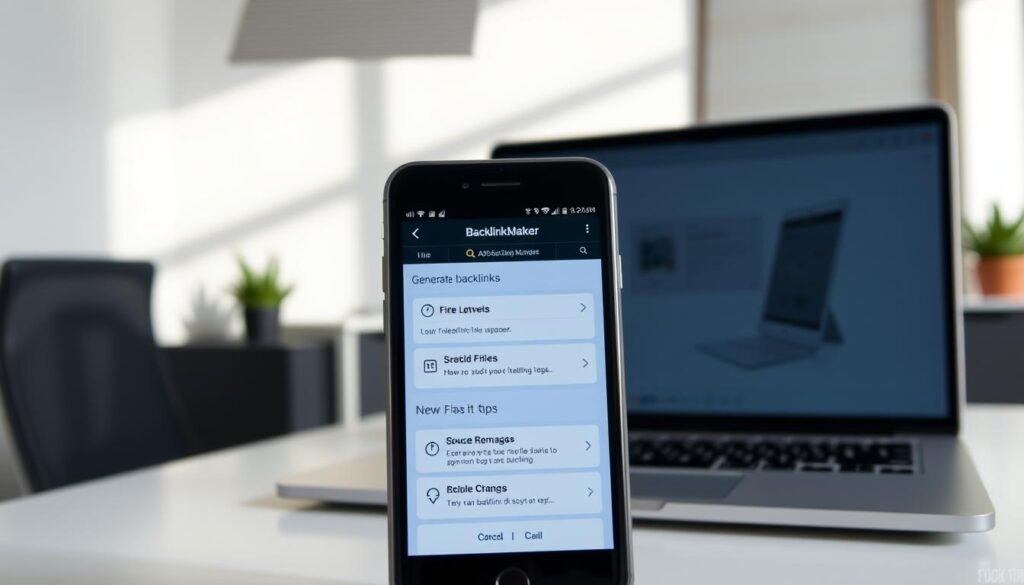
The interface presents a pipeline that moves from discovery to qualification, placement, and verification. Users get bulk editing, tags, and filters by authority, relevance, and risk. Anchor mix visualizations help balance targets, while the backlink maker software keeps steps simple with clear labels and tooltips.
Lists update fast, and filters apply in real time. Keyboard shortcuts and inline edits reduce clicks. This supports workflow automation without adding extra layers or hidden menus.
Campaign setup time and automation depth
Setup relies on templates, dynamic anchor suggestions, and one-click velocity policies. Schedulers release link batches over set windows, and rules guide topical clusters to the right pages. Alerts flag anchor overuse before it becomes a problem.
These features cut launch time and keep teams aligned. The best backlink maker approach is to combine presets with flexible overrides so managers stay in control.
Performance at scale: large sites and multi-project management
The platform handles hundreds of projects with shared asset libraries and standardized policies. Cross-project reporting remains responsive, and filters return results quickly, even under heavy load. Shared tags and roles keep teams in sync across campaigns.
For agencies and enterprise SEO, workflow automation extends to bulk rules, cloned campaigns, and consistent naming. This enables fast onboarding for new projects while maintaining uniform quality checks.
Error handling, retries, and reporting transparency
Queue-based execution manages tasks with status dashboards for every stage. Automated retries resolve transient HTTP issues, and CAPTCHA detection triggers warnings. Logs show successes, failures, and pending actions with time stamps and reason codes.
Reporting includes exportable summaries, indexation checks, rel attributes, and HTTP status verification. Annotations track algorithm updates or sitewide changes, giving context to shifts in outcomes within this backlink maker software.
| Aspect | What It Delivers | Why It Matters | Impact on Teams |
|---|---|---|---|
| Pipeline UI | Discovery → Qualification → Placement → Verification | Clarifies progress and next steps | Fewer handoffs and missteps |
| Filtering & Tags | Authority, relevance, risk, and anchor mix views | Focuses effort on high-value prospects | Faster prioritization and review |
| Automation & Rules | Templates, velocity policies, scheduled batches | Controls cadence and quality | Consistent execution across campaigns |
| Scale & Speed | Shared libraries, cross-project reporting, quick queries | Supports large portfolios | Stable performance under load |
| Reliability | Queue-based runs, uptime tracking, retries | Reduces disruption and delays | Predictable delivery timelines |
| Transparency | Exportable reports, verification checks, annotations | Explains wins and drops | Clear client and stakeholder updates |
Bottom line for this backlink maker app review: strong usability, fast responses, and accountable reporting define a practical path for teams seeking the best backlink maker with dependable workflow automation.
Results and Performance: What Users Can Expect
Real gains hinge on crawl habits, content strength, and a steady cadence. With a well-tuned backlink building tool or backlink generator ai, teams can track progress against clear performance benchmarks and adjust pace before issues surface.
Early patterns matter: watch indexation, anchor mix, and referring domain diversity. A balanced plan using a backlink maker online keeps growth smooth while avoiding sharp spikes.
Time-to-index and link acquisition velocity
Fresh placements on frequently updated sites often index within days; slower domains may take a few weeks. Internal links on the linking page speed discovery.
Link velocity should mirror site history and the norm for its niche. Controls in a modern backlink building tool let teams stage rollouts to keep patterns natural.
Impact on rankings, impressions, and referral traffic
Expect movement first on mid-tail and long-tail terms, then tougher targets as signals compound. Search Console impressions typically rise before rank averages stabilize.
Referral traffic grows when links sit on relevant pages with real readership. A backlink generator ai can prioritize pages with topical alignment to convert clicks that matter.
Case-style scenarios: local sites, niche blogs, and SaaS brands
Local businesses tend to gain from citations, chamber directories, and community blogs. Visibility in Maps and localized packs often improves as authority clusters form.
Niche blogs benefit from resource pages, expert roundups, and forum features tied to their topic. A careful use of a backlink maker online helps surface curators in the same micro-community.
SaaS brands see traction through thought leadership, comparison pages, and integration partner mentions. These placements lift discovery and build trust across the funnel.
Sustainability and link decay mitigation
Links churn over time. Ongoing audits catch drops early, while recrawls confirm status and quality. Replacement outreach keeps equity steady.
Maintain a diverse domain mix and healthy anchor spread. Track performance benchmarks like authority growth, domain variety, and revenue attribution to guide the next wave of acquisition.
Compliance, Safety, and Risk Management
Modern link building starts with Google Search Essentials and spam policies. An ai powered backlink maker should prioritize editorially earned mentions over manipulative schemes. Teams can align intent by labeling sponsored placements, using nofollow or UGC when required, and honoring robots directives and site terms of service.

Strong compliance for backlink maker software pairs filter logic with human oversight. Built-in toxicity screens, outbound link density limits, and thin content alerts reduce exposure. Routine spam checks help flag private blog networks and mass-submission traps before they affect a domain’s footprint.
Sound risk management also means pacing. Velocity controls smooth link growth and avoid sudden spikes. Brands can mix dofollow with nofollow and UGC, favor branded and URL anchors, and keep topical relevance tight to the page. This balance supports durable signals across updates.
Governance matters as much as automation. Role-based permissions restrict actions by job scope, approval workflows gate risky changes, and audit logs record who approved each placement. Clear documentation gives stakeholders visibility and preserves continuity across campaigns.
In the United States, disclosures are non-negotiable. The Federal Trade Commission expects transparent labeling for advertorials and sponsored content. Teams should keep proof of disclosures, archive emails, and run periodic manual spot checks to verify that labels persist after publication.
Contingency planning protects momentum when algorithms shift. If a link type loses value, the ai powered backlink maker can reweight sources and suggest safer targets. Meanwhile, high-quality content—expert guides, original data, and media assets—remains the most reliable path to natural coverage.
Pricing, Plans, and Value vs. Best Backlink Maker Alternatives
Teams weighing pricing for backlink maker software want clear tiers, real outputs, and fair limits. This overview frames what buyers can expect and how to gauge value against the best backlink maker options and broader link-building tactics.
Free vs. paid tiers and feature gates
A free or trial tier usually offers discovery credits and capped placements to prove fit. Paid plans expand monthly credits, unlock advanced reports, and add export and scheduling tools. Enterprise adds SSO, SLAs, role controls, and API access for workflows that span many teams.
When reading a backlink maker app review, check how credits are counted, whether dofollow verifications are included, and if relevance scores are visible. That detail matters more than raw volume.
Cost per link and ROI modeling
A simple model helps: total monthly spend plus labor divided by verified dofollow links. Layer in ranking lift on target keywords, organic traffic gains, and assisted conversions to see net impact. Track link velocity to avoid risk and to align with budget pacing.
For transparent pricing for backlink maker software, look for per-seat costs, overage rates, and whether credits roll over. Clean math makes performance easy to defend in budget reviews.
Comparisons with backlink maker online and manual outreach
General backlink maker online tools often push directories or profile links. They are fast, but quality and relevance vary. AI-led systems surface context-rich placements and score risk, which raises the floor on outcomes while keeping scale.
Manual outreach via email can win stronger editorial links from publishers such as Forbes, TechCrunch, or Wired, but it costs more time and money. AI reduces prospecting hours and expands throughput, yet still needs guardrails to keep quality high.
Who gets the most value from each plan
Bloggers and niche sites get mileage from lower tiers with focused discovery on topical hubs. Agencies benefit from pooled credits, cross-client reporting, and repeatable workflows. Ecommerce teams gain from category and product page support tied to structured data.
Enterprises capture the most from governance, integrations with analytics stacks like Google Analytics and Adobe Analytics, and security features. In practice, the best backlink maker choice matches current growth stage and the mix of owned content and outreach capacity.
Conclusion
BacklinkMaker AI positions itself as an AI-first solution for off-page SEO. Across this BacklinkMaker AI – World’s First AI Powered Backlink Maker App Review, the platform showed strength in rapid discovery, smart prioritization, and guided placement. Its anchor text optimization and risk controls help teams move faster without losing editorial quality. When compared with traditional toolchains, the standout edge is automation depth, semantic relevance scoring, and transparent reporting.
Real gains still depend on strong content, solid technical SEO, and a measured link velocity. The backlink creation app works best for teams that want scalable governance and clear metrics. For U.S.-focused bloggers, agencies, ecommerce brands, and SaaS companies, it can cut time-to-link and improve campaign consistency while keeping compliance in view.
The review finds that backlinkmaker ai benefits most from human oversight at key steps. Editors should approve contexts, confirm brand fit, and watch thresholds for toxicity and velocity. Used this way, the ai powered backlink maker supports sustainable growth and reduces busywork, while keeping quality signals intact.
Teams should run a pilot to validate fit. Benchmark cost per verified link, time-to-index, and organic lifts against current workflows. If the numbers hold, scale with clear rules, cadence controls, and ongoing audits. In short, this BacklinkMaker AI – World’s First AI Powered Backlink Maker App Review shows a focused path to safer, faster link building—guided by data, backed by automation, and improved by human judgment.
FAQ
What is an AI powered backlink maker and how does BacklinkMaker AI differ from a basic backlink maker online?
An AI powered backlink maker uses machine learning and natural language processing to find relevant link opportunities, suggest safe anchor text, and guide placement. BacklinkMaker AI goes beyond basic backlink maker online tools that only create low-value directory links. It scores topical relevance, authority, and spam risk, then prioritizes outreach or placement paths that align with Google’s guidelines.
How do backlink generators fit into modern off-page SEO in the United States?
They speed up prospect discovery, qualification, and execution. For U.S. SEO, they help map local and national opportunities, calibrate link velocity, and maintain compliance with Google Search Essentials. The goal is to earn contextually relevant links that support rankings, impressions, and referral traffic.
What are the key differences between manual link building and using an AI-assisted backlink building tool?
Manual methods rely on human prospecting with platforms like Ahrefs and Semrush, plus personalized outreach. An AI-assisted backlink building tool predicts relevance, automates anchor planning, and queues placements at scale. Human oversight still matters for brand safety, editorial fit, and compliance.
Where does BacklinkMaker AI sit among backlink maker software options?
It positions itself as a backlink creation app that unifies discovery, qualification, anchor recommendations, and execution. Unlike traditional stacks that split tasks across multiple tools, it offers an end-to-end workflow with risk controls and reporting.
Who benefits most from this backlink creation app?
Bloggers seeking niche visibility, agencies running multi-client programs, ecommerce teams building category and product page authority, and enterprises needing governance, audit trails, and role-based controls gain the most value.
How does BacklinkMaker AI compare with traditional outreach platforms and CRMs?
Traditional platforms excel at data depth and outreach management. BacklinkMaker AI competes on automation, speed, predictive relevance scoring, and anchor text optimization, while supporting manual review for sensitive placements.
What core features does this ai powered backlink maker include?
Features include AI-driven discovery, placement suggestions, workflow automation, anchor diversification, domain authority and topical checks, spam risk scoring, and link velocity controls with previews and impact estimates.
How does the backlink generator AI decide which sites are a good fit?
It blends crawl data, authority proxies, traffic quality, semantic relevance, and toxicity filters. It flags risky patterns like excessive outbound links, spun content, or link farm footprints to protect brand safety.
What technology powers relevance scoring and anchor text suggestions?
Semantic embeddings, entity mapping aligned to knowledge graph relationships, and on-page signal analysis. These models assess topical proximity and propose natural anchors—branded, partial-match, generic, and URL—reducing over-optimization.
How are freshness and indexability handled under the hood?
The system tracks last-modified headers, sitemap updates, recrawl frequency, and indexation checks. It verifies HTTP status, rel attributes, and canonical tags to avoid non-indexable or redirected pages.
What does onboarding look like for the backlink maker software?
Users connect domains, import target URLs, define anchor preferences, and set geo targeting for the United States. An initial audit maps existing backlinks, identifies gaps, and sets risk thresholds. Teams can configure roles, approvals, and reporting cadences.
How fast can teams launch a campaign with this backlink building tool?
Most can ship a first campaign quickly using guided setup and templates. Automation handles sequencing, scheduling, and conditional rules, while users retain manual overrides for high-stakes targets.
How does the app perform at scale for large sites or agencies?
It supports multi-project management with bulk editing, filters by authority and risk, shared asset libraries, and cross-project reporting. Queue-based execution and retry logic help sustain reliability across hundreds of campaigns.
What kind of reporting and transparency should users expect?
Dashboards show discovery-to-placement status, anchor mix, domain diversity, and link verification. Exports include indexation checks, HTTP status, and annotations for algorithm updates or sitewide changes.
What results can users expect in terms of link velocity and time-to-index?
Time-to-index often ranges from a few days to a few weeks, depending on the linking site’s crawl rate. Velocity controls pace acquisition to match site history and industry norms, avoiding unnatural spikes.
How does this backlink maker app impact rankings, impressions, and traffic?
When paired with strong content and technical SEO, users typically see improved keyword positions, higher Search Console impressions, and relevant referral traffic. Outcomes vary by competition and content quality.
Are there example scenarios for local businesses, niche blogs, and SaaS brands?
Local sites benefit from citations and community links. Niche blogs gain from topical roundups and resource pages. SaaS brands win with thought leadership placements, integration mentions, and comparison pages.
How does the platform address sustainability and link decay?
It monitors link health, alerts on drops, and re-queues replacements. Domain diversity and anchor variety are tracked to keep a natural profile over time.
Is BacklinkMaker AI compliant with Google’s policies?
It includes toxicity filters, authority and relevance checks, and velocity governance to align with Google Search Essentials. It supports mixing nofollow, UGC, and dofollow where appropriate and respecting robots directives and site terms.
What governance and safety features are available?
Approval workflows, role-based permissions, and audit logs help teams control risk. The system flags PBN-like footprints, thin content, and high outbound link density before placement.
How is pricing structured compared to the best backlink maker alternatives?
Typical tiers include a trial with limited credits, mid-tier plans with higher limits and reporting, and enterprise plans with SSO, SLAs, and APIs. Agencies and enterprises often realize the best value through scale and governance features.
How should teams model cost per link and ROI?
Divide subscription plus labor by verified dofollow links to estimate cost per link. Compare against ranking lifts, organic traffic gains, and assisted conversions to judge ROI.
How does BacklinkMaker AI compare with manual outreach and common backlink maker online tools?
AI reduces prospecting time and increases throughput with predictive scoring, while manual outreach offers deeper personalization but is slower and costly. Basic online generators tend to produce low-quality links; BacklinkMaker AI focuses on relevance, authority, and risk management.
What is the difference between a backlink generator AI and a backlink maker app review?
A backlink generator AI is the technology that discovers and suggests links. A backlink maker app review evaluates how that technology performs in practice, including features, usability, compliance, pricing, and alternatives.