
A focused prompt pack that turns blank pages into clean, step‑by‑step drawings fast.
You want to teach drawing, create KDP-style “how to draw” books, or produce easy tutorials for YouTube and social posts—but planning each lesson takes hours. That is where the 323 How-To-Draw Prompts shine. They give you clear, structured instructions so Gemini or other AI models can lay out step-by-step drawing guides, practice sheets, and captions. I used them to outline character, animal, and object sketches in minutes. If you need repeatable quality, consistent style, and a faster workflow, this set cuts the heavy lifting so you can publish, teach, or sell with confidence.
What is 323 How-To-Draw Prompts?
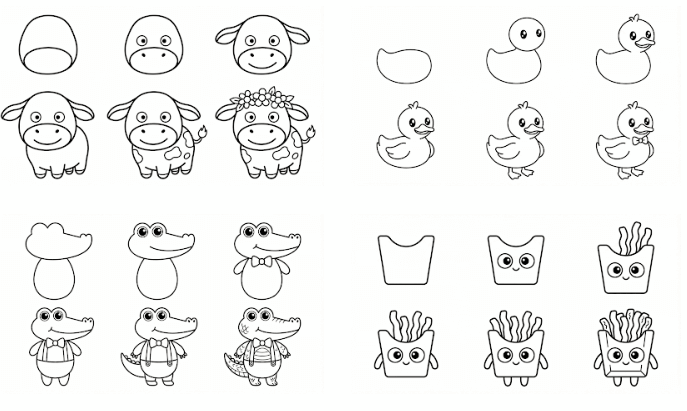
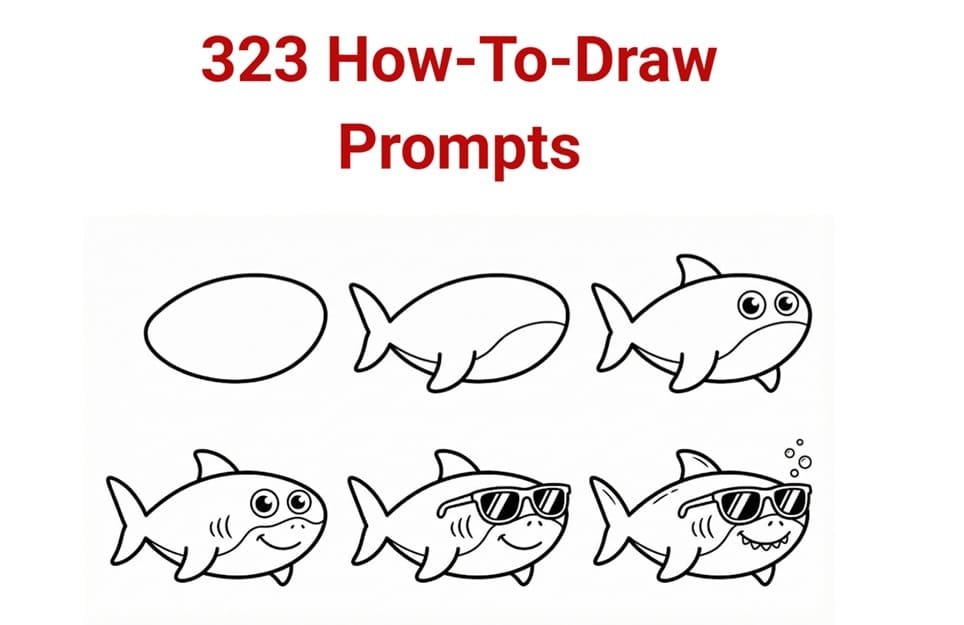
323 How-To-Draw Prompts is a curated library of 323 ready-to-use prompts designed for AI assistants and art models. The pack focuses on “how to draw” workflows. It guides AI to produce step-by-step drawing instructions, clean outlines, and practice-friendly formulas. It includes Gemini prompts and Nano Banana Pro prompts so you can adapt outputs across tools. The goal is simple: help you generate drawing lessons, printable worksheets, and tutorial scripts fast and with predictable quality.

My Personal Experience & In-Depth Walkthrough:
For the last 48 hours, I built three mini projects with 323 How-To-Draw Prompts. I tested the prompts inside Gemini and used Nano Banana Pro prompt variants to fine-tune style and line clarity. I aimed to make a kids’ animal worksheet, a simple character tutorial for shorts, and a printable “How to Draw a Robot” page.
I started by picking a prompt that matches a drawing category. Each prompt begins with a step-by-step structure, a shape-first approach, and clear constraints. I pasted the prompt into Gemini, added the subject, and set the tone (kid-friendly, beginner, or intermediate). The AI returned a sequenced tutorial with simple shapes, incremental steps, and clear labels. I was impressed by how consistent the layout looked (big pro). The steps were clean and short. Perfect for worksheets.
Next, I swapped in the Nano Banana Pro prompts for line-art emphasis. These versions nudged the AI to focus on smooth outlines and shape control. My robot tutorial came out in five steps, each building on the last. The language stayed simple and direct (another pro). I wanted a style variation with thicker outlines for print. That worked, but I had to ask the AI for a slight rewrite to simplify two steps (minor con). I learned that the best results came when I added a subject descriptor and a style tag up front.
I then built quick captions and a lesson summary using a bonus prompt. That took one minute. I tested a longer character prompt to see if the AI would drift. It did a little. I had to reduce the number of steps from eight to six (small con). Once I added the “beginner-level” constraint, the content snapped back into focus.
The speed gain is real. From subject idea to a classroom-ready worksheet in under ten minutes is hard to beat. The big win is how the 323 How-To-Draw Prompts remove guesswork so you can scale tutorials, KDP interiors, or social content without losing consistency.
What Makes It Stand Out / Key Features
- 323 ready-made “how to draw” prompts organized by subject and difficulty
- Gemini prompts and Nano Banana Pro prompts versions for flexible outputs
- Step-by-step, shape-first structure that keeps lessons clear and beginner-friendly
- Style controls for line thickness, simplicity, and printable black-and-white
- Built-in guidance for captions, titles, and short social scripts
- Constraints for consistent length, tone, and layout across lessons
- Fast adaptation for KDP interiors, classroom worksheets, and YouTube shorts
- Works with popular AI assistants and image-focused systems

What I Like
- Predictable step-by-step outputs that are easy to publish
- Clean, simple language for kids and beginners
- Clear style controls for line art and print-friendly pages
- Fast idea-to-lesson time; great for batch production
- Easy tweaks to add tone, audience, and difficulty tags
- Solid cross-tool adaptability with Gemini prompts and Nano Banana Pro prompts
- Great for teachers, creators, and low-content publishers
What Can be improved
- Some complex subjects may need a trim or manual edit
- Style variations can feel similar without extra keywords
- Best results require a capable AI model (free tiers may be limited)

Pricing And Affordability
Pricing can change during promotions and launches. Here is how the 323 How-To-Draw Prompts offer is typically structured. Check the live page for current deals and bundles.
| Plan/License | What You Get | Ideal For | Pricing Notes |
|---|---|---|---|
| Front-End: 323 How-To-Draw Prompts | Full set of 323 prompts, Gemini prompts, Nano Banana Pro prompts | Solo creators, teachers, KDP beginners | Introductory pricing; may vary by launch window |
| Pro Add‑On | Extra style variations, advanced templates, longer-form prompts | Power users, agencies, course creators | Optional upgrade; check current offer |
| DFY Templates Pack | Pre-built sheets, layouts, and copy blocks for fast publishing | KDP and print-on-demand workflows | Optional bundle; pricing can be dynamic |
| Agency/Commercial License | Client-use rights and batch production | Freelancers, studios, micro-agencies | Often a one-time add-on; verify at checkout |
Why should you buy 323 How-To-Draw Prompts
If you need fast, repeatable “how to draw” content, 323 How-To-Draw Prompts deliver. The prompts align with how learners absorb drawing steps: big shapes first, details last. I used them to spin up printable worksheets and short scripts without heavy editing. They also scale well: you can batch topics, keep style consistent, and publish more often. The Gemini prompts and Nano Banana Pro prompts variants give you flexibility across tools, which reduces lock-in. For low-content publishing, classrooms, or YouTube shorts, the pack turns a slow, manual process into a simple workflow. It pays for itself fast if you create on a schedule.

Comparison With Competitors of 323 How-To-Draw Prompts
| Product | Prompt Count | Focus | Compatibility | Best For | Unique Angle |
|---|---|---|---|---|---|
| 323 How-To-Draw Prompts | 323 | Step-by-step drawing lessons | Gemini prompts, Nano Banana Pro prompts, general LLMs | Teachers, KDP, YouTube shorts | Shape-first teaching framework and print-friendly flow |
| AI Drawing Master Prompts | 200+ | General art prompts | Mixed LLMs and image tools | Hobbyists | Broad art variety, less tutorial structure |
| Midjourney How-To-Draw Toolkit | 150+ | Visual generations for steps | Image models | Visual-first creators | Strong reference images, lighter on text instructions |
| Promptify Drawing Curriculum | 250 | Education-focused lessons | LLMs | Teachers and schools | Classroom rubrics with lesson outcomes |
FAQ Of The 323 How-To-Draw Prompts Review
Do I need paid AI tools to use 323 How-To-Draw Prompts?
You can use many prompts with free tiers. Yet paid plans often yield better control and longer outputs. I had the best results using Gemini with the pack.
Can I sell the worksheets or books I create with these prompts?
The pack is designed for creators and educators. Check the license on the sales page, then publish your original outputs accordingly.
Are the 323 prompts hard to customize?
No. Each prompt has clear tags for subject, style, tone, and level. Add your subject, pick a level, and you will get a clean step-by-step guide.
Will these work for beginners or kids?
Yes. The 323 How-To-Draw Prompts use a shape-first structure and short steps. That makes them ideal for kids and new artists.
What if the AI output is too long or complex?
Use the difficulty tag and cap the number of steps. Ask for 5–6 steps and beginner level. That keeps outputs tight and clear.
Conclusion
323 How-To-Draw Prompts is a smart, time-saving system for anyone who needs clean, repeatable drawing lessons. It turns vague ideas into clear steps, helps you publish faster, and keeps style consistent. If you teach, make KDP interiors, or post short tutorials, this pack can level up your workflow. Add a subject, choose the difficulty, and let the prompts guide the structure. If you want reliable “how to draw” outputs across tools, the 323 How-To-Draw Prompts is a strong buy.